

— Morioka: Chill Out City
Editing and Text by Mikaze Sato
Born in Yamagata Prefecture. Student in the Regional Design Course of the Planning and Design Department.
Photography by Takashi Mochizuki
Photographer. Born in Tokyo in 1967. Graduated from Tama Art University, Faculty of Fine Arts, Department of Painting, majoring in oil painting. Founded BIFE pictures in 2013. Appointed professor at Tohoku University of Art and Design in 2022. Active in a variety of fields, primarily advertising.
It's already been three years since Morioka City in Iwate Prefecture was featured second after London in the New York Times' "52 Places to Go in 2023" list in January 2023.
However, Morioka's appeal differs from that of big cities or typical tourist destinations.
I visited Morioka and explored the appeal of its "small waves" through conversations with various creators.
Morioka, An Escape Zone
homesickdesign
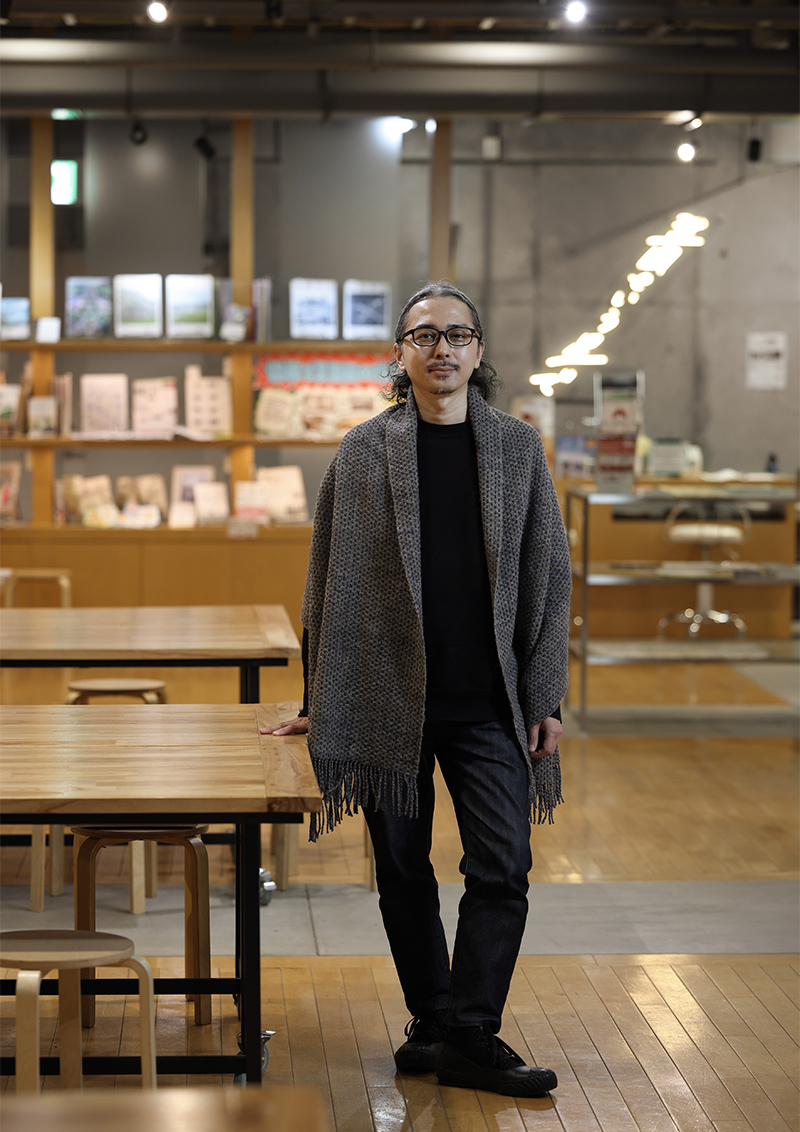
Shinsuke Shimizu
homesickdesign LLC is a creative agency based in Morioka City. Their project "On the Planet Called Morioka", which focuses on the relationship between people and their surroundings, uses photo essays and design to capture and share what they call "scenery that we unconsciously overlook."
Shimizu, the agency's representative, was born in Ichinoseki City, Iwate Prefecture, in 1982. While studying at Iwate University Graduate School, he began working freelance under the name homesickdesign. He officially launched his design company in 2010. So, what kind of place does he think Morioka is? He used the expression "like small, gently continuing waves," and continued: "I thought there might be something about the sheer number and diversity of these small, insignificant charms that are hard to sum up. It could be the scenery or the bridges, or the many small shops, select shops, record shops, and restaurants. There are people who play music, people who are creative, people who love literature, and people who love urban development.
It seems like the accumulation of things that don't really translate well to anything specific creates a small wave, creating that kind of impression."
Even within 10 minutes of where we conducted our interview, there were seven or eight favorite coffee shops. "Everyone has about seven or eight. Like, I'll go to this place with this person, or if I want to read this book, I'll go to that place..." he said with a smile. "You can create your own wave," he continued. "It's a small town, but it has such a diverse range of content, I think it's easy to choose based on your life situation and mood."
This begs the question: Why did I feel lonely in Morioka, a town packed with so many small charms? As if to answer that question, he related the following story. "When people come to Morioka from far away, I sometimes invite them to imagine it as a sort of Tohoku escape zone, not as a way to work hard, but as a way to return to themselves or escape," he says, meaning the goal isn't to uplift their spirits.
Indeed, while I was in Morioka, I too found myself lost in thought at random times—walking, waiting for the bus, drinking coffee in a cafe. I think about things without answers and how I was feeling at the time. This feeling wasn't so much loneliness, but perhaps closer to a sense of calm, of coming face-to-face with my own heart. Without any preparation, you can choose your destination and how you spend your time by letting your feelings guide you. Morioka also creates small, gentle waves in the hearts of those who visit from outside.
Putting Morioka's charm into words
We asked Craig Mod, who has recommended Morioka to the world, and Daisuke Hayasaka of BOOKNERD, a pioneering new bookstore model, to put into words the charm of Morioka. Why is "calm change" occurring in Morioka? I asked to find out the reason.
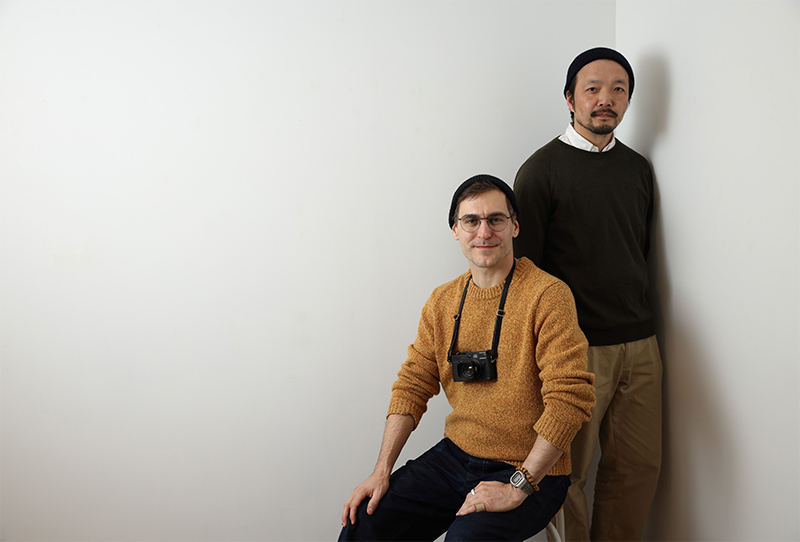
Photographer, Writer,Walker
Craig Mod
Born in Connecticut, USA in 1980. Has lived in Japan since 2000. In 2023, he recommended Morioka City, Iwate Prefecture, to The New York Times' list of "52 Places to Visit in 2023."
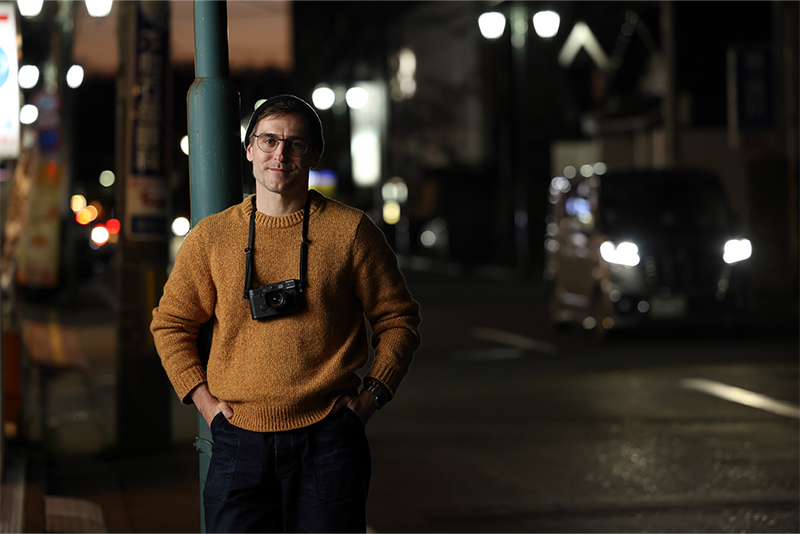
The appeal of Morioka as a "healthy city"
In addition to being a writer and photographer, Mod also calls himself a "walker." He has explored various places in Japan on foot, taking photographs and observing them through conversation.
He says that cities can be healthy or unhealthy, and that the key points to consider are their "cityscape" and "people." He believes Morioka, which he considers a healthy city, maintains a good balance between the two. He says that excessive crowds can also lead to a city's unhealthiness. "Having a purpose takes away a city's health. For example, even in tourist destinations that are overwhelmed these days, until recently, many people were kind enough to join in. But now, there are many people who seem to be selfishly consuming the place." After recommending Morioka to the New York Times, he worried that the city would become unhealthy. However, regarding the actual tourists who have visited, He says, "They respect Morioka and want to see it with their own eyes.
I think these tourists are a positive factor in the city's health."
While overtourism is a problem across Japan, Morioka has maintained its comfortable living environment. What you'll find there is a traditional landscape and the lifestyle of the locals. It's not people venting their desires those who come here, but people who want to spend their precious time experiencing what it's like to live as a local citizen. As he says, it's the kindness of the people that makes a healthy city.
BOOKNERD, a hub in Morioka
BOOKNERD
Daisuke Hayasaka
Born in 1975. After working as a salaryman, he opened the new book and second-hand bookshop "BOOKNERD" (Otesaki Building 1F, 16-16 Uchimaru, Morioka City, Iwate Prefecture) in 2017.
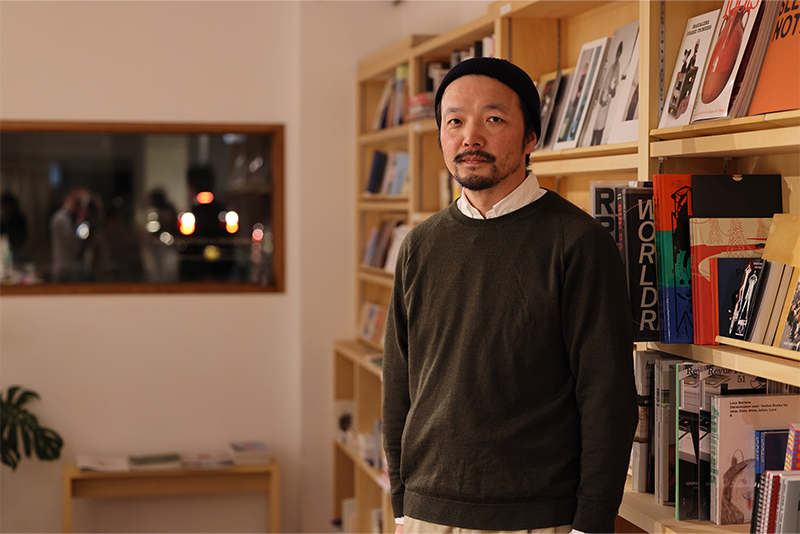
Entering the store, one's heart leaps with excitement at the many books one sees for the first time, as if peering into the study of a book-loving acquaintance. BOOKNERD is involved in publishing in addition to its bookstore business, and the publication of "Watashi wo kuhukuni shinaihogaii/ Don't Leave Me Hungry (Revised Edition)" (Rain Kudo, 2018) marked the beginning of her talent being recognized nationwide. When asked why Hayasaka chose Morioka as the location for his store, he says, "I thought it would be a place where people would tour the city one after another."
Furthermore, Hayasaka has also experienced a sense of loneliness in Morioka, which he writes about in his book "Boku niwa koreshika nakatta/All I Had" (2021, Kirakusha Publishing Co., Ltd.).
"I interpreted it as a sense of elegance,"
he says. Elegance seems to capture the moment of change." While Morioka retains its historic streetscape, he sees it as gradually evolving into a more modern landscape. "But at the same time, old buildings remain. The current state of coexistence, the loneliness of the area before the transition, all add to the charm of the city."
The lingering nostalgia and the convenience of the city are simply part of the city's transition. Time flows at our own pace, as we let ourselves go with the flow. Opening a book in Morioka, you might find yourself accepting that this is just how life is.
When you can call your travel destination home
Craig Mod’s Talk Event
─NEW TRIP, NEW HOME
Our new destination, our hometown
It has been one year since Mod launched "KISSA BY KISSA: Streets and Cafes - Why I Travel Japan on Foot" from BOOKNERD. To commemorate this, a talk event featuring author Mod and translator Eiichi Imai was held at BOOKNERD on November 29th, 2025. The theme was "Destinations and Hometowns." Even if you fall in love with the place you choose to travel to, many people would be hesitant to live there. The two explore the distance between a favorite destination and a new hometown.
Eiichi Imai
Freelance writer and editor. Travels domestically and internationally, writing, filming, editing, planning, and producing programs.
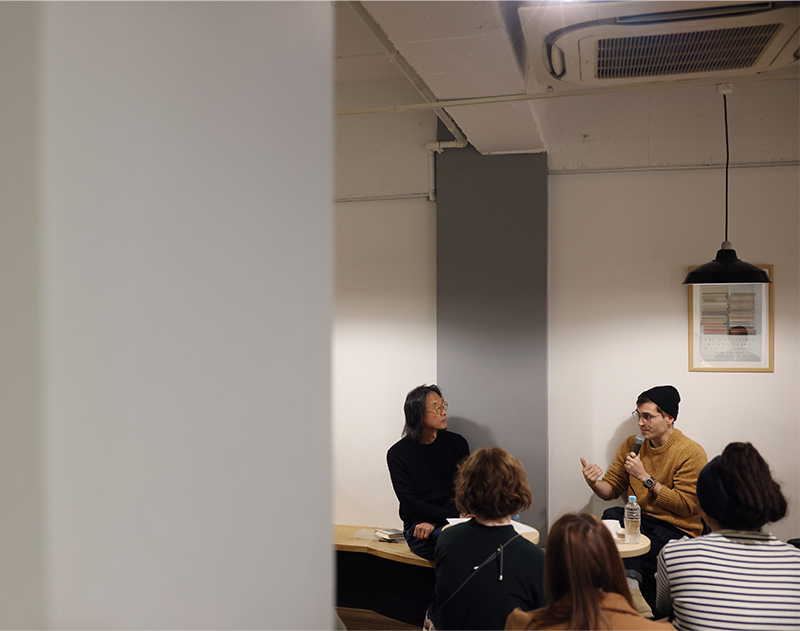
The conversation turned to the idea that in America, people tend to move to new jobs. When asked if people move more frequently than in Japan, Mod replied, "I think people are constantly searching for a better, more comfortable place to live." He continued, "But I think Japan is changing, too." He said he gets the impression that, as Japanese cities shrink and jobs disappear, more people are fleeing to the city. The conversation then turned to Morioka. Imai asked, "Do you think Morioka has the power and charm to attract people and make it a place where newcomers can find a home?" Mod answered without hesitation, "I definitely think it does. If someone told me to live in Morioka, I'd say, 'Yes, sure!' I can totally imagine what it would be like to live in Morioka." The conversation continued so long that they almost forgot the time had passed. They talked about the places they've traveled to and cities they would be happy to live in. I felt as if I was traveling and glimpsing cities all over Japan and the world.
Beyond the chilled-out Morioka, what awaited us wasn't loneliness, but rather a vision of our future lifestyles and the future of rural areas. There's no need to rush to force yourself to become smaller, less, or quieter. It's not a bad thing to move, change, and let time take its course. If you can remember the joy of facing things head-on, whether by oneself or with a loved one, you might discover a new way of spending time that you've never encountered before.