
Updating Old Folk House with Art
PHOTO: Kaze no sawa / TEXT: Taku Minakawa
Kaze no Sawa, an old folk house nestled in the mountains of Ichi base, Kurihara City, Miyagi Prefecture. This place, set within a tangible cultural property over 200 years old, transcends the role of a mere preserved building. It serves as an experimental space that fuses architecture, art, and food, redefining “true richness” in the modern era. What flows here is a unique aesthetic that cherishes traditions rooted in the land while flexibly utilizing them with contemporary sensibilities. The authentic texture, stripped of excessive ornamentation, and the natural way of being, in harmony with nature's cycles, present us̶living in an accelerating modern society̶with a new standard for living.
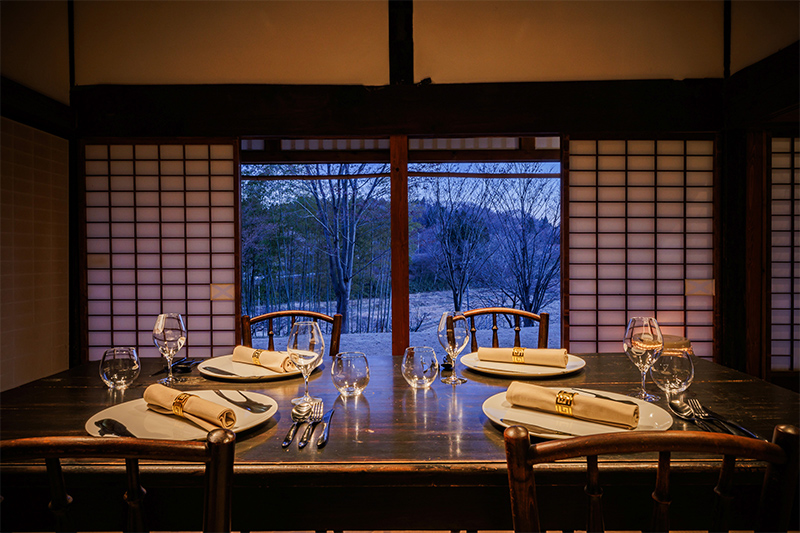
Interview with Kinya Hayakawa:
Updating the "State of the Art" of old fork house
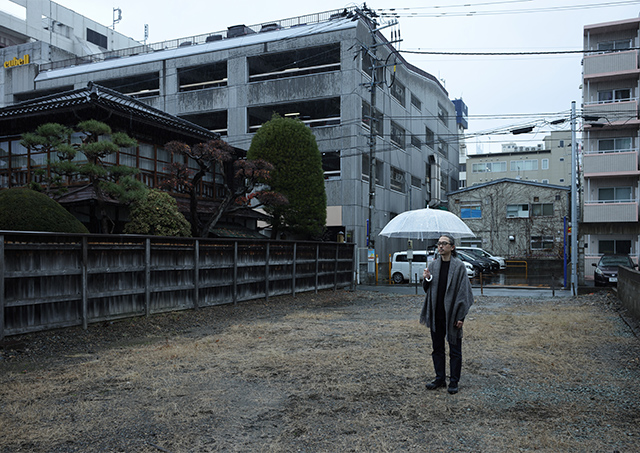
"Old folk house were undoubtedly the 'state-of-the-art' of their era when built," says architect Kinya Hayakawa. The strength that has endured the test of time and remains today is a testament to the craftsmen's pride, which saw through to the very essence of the materials. Owner Hitoshi Takayama takes on the challenge of integrating this historical value into the modern economic cycle. In contrast to contemporary architecture that prioritizes efficiency, he deliberately finds "a beauty that can compete on the world stage" in the inconvenient details of thatched roofs and plasterwork, achieving a high-level fusion of convenience and aesthetics.
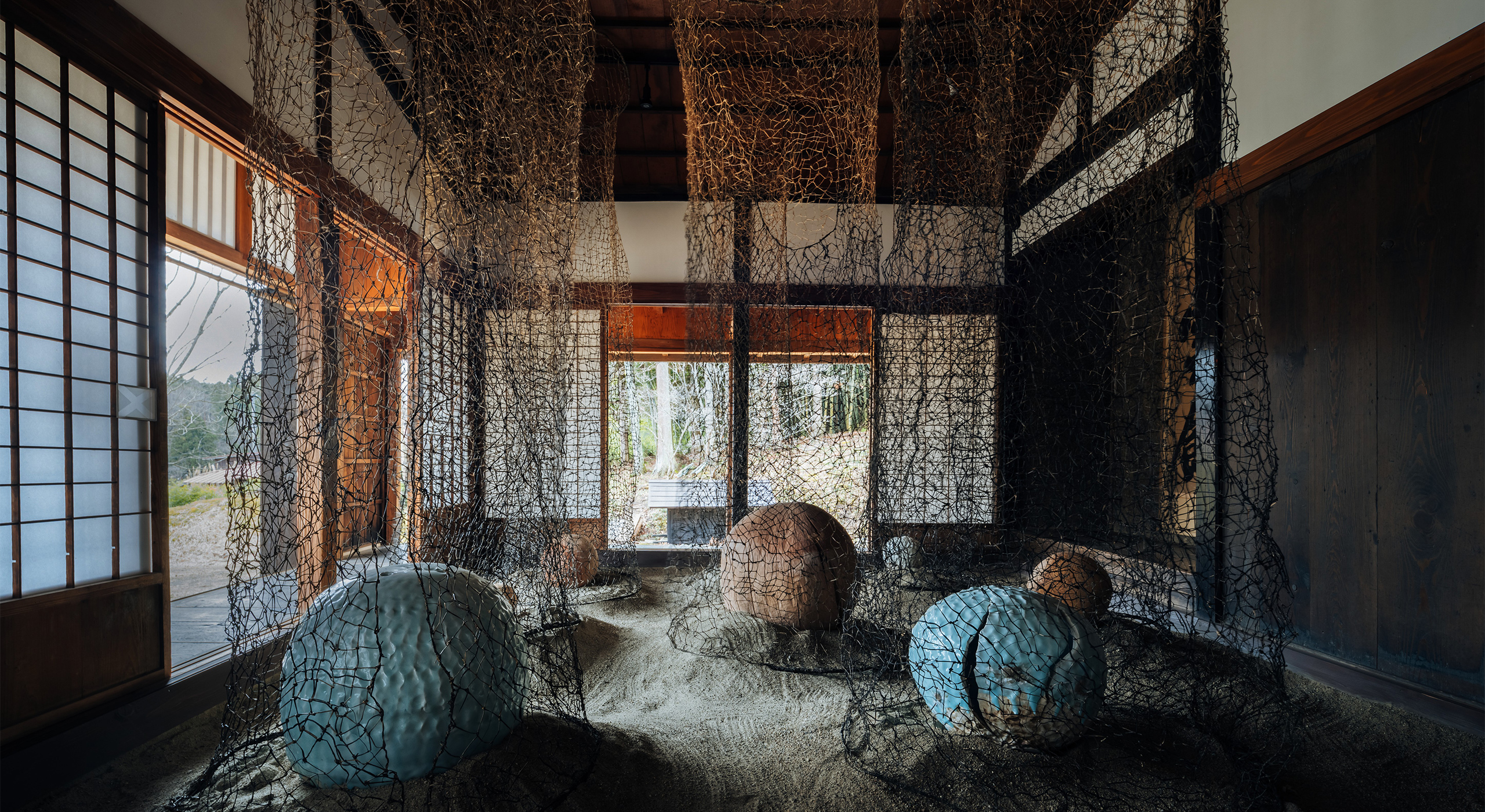
Adding spiritual depth to this serene space are the works of ikebana artist Ryusaku Matsuda. His philosophy of "entrusting life" awakens the building's memories and presents an attitude of equal engagement with nature. Even avant-garde attempts, like peeling back the floor to converse with the earth, blend seamlessly into the architecture here.This is not mere preservation. It is an act of continuously renewing the "authentic" with contemporary sensibilities while inheriting the land's memory. Sleeping beneath heavy beams, enveloped in the latest aesthetic consciousness. This experience should vividly reawaken our sense of time and beauty, something we risk losing amidst excessive convenience.
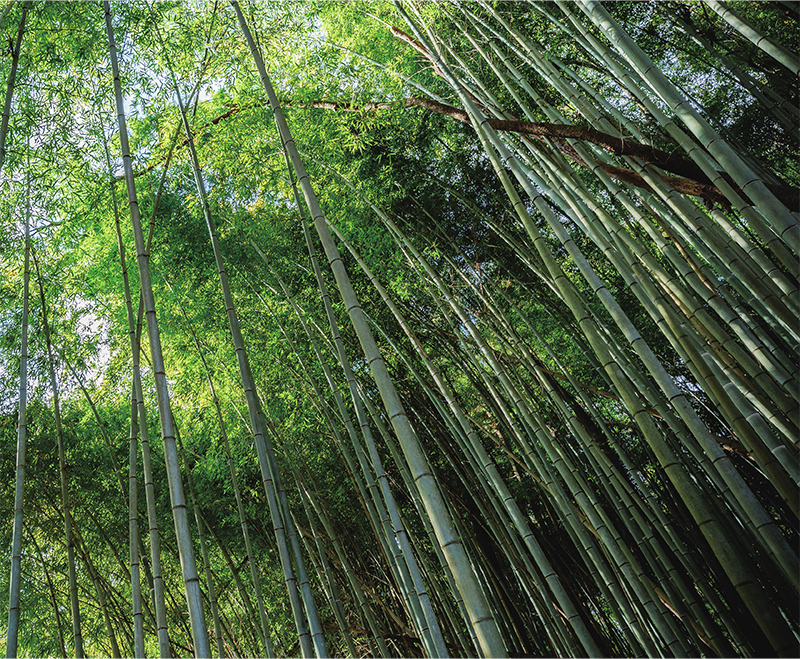
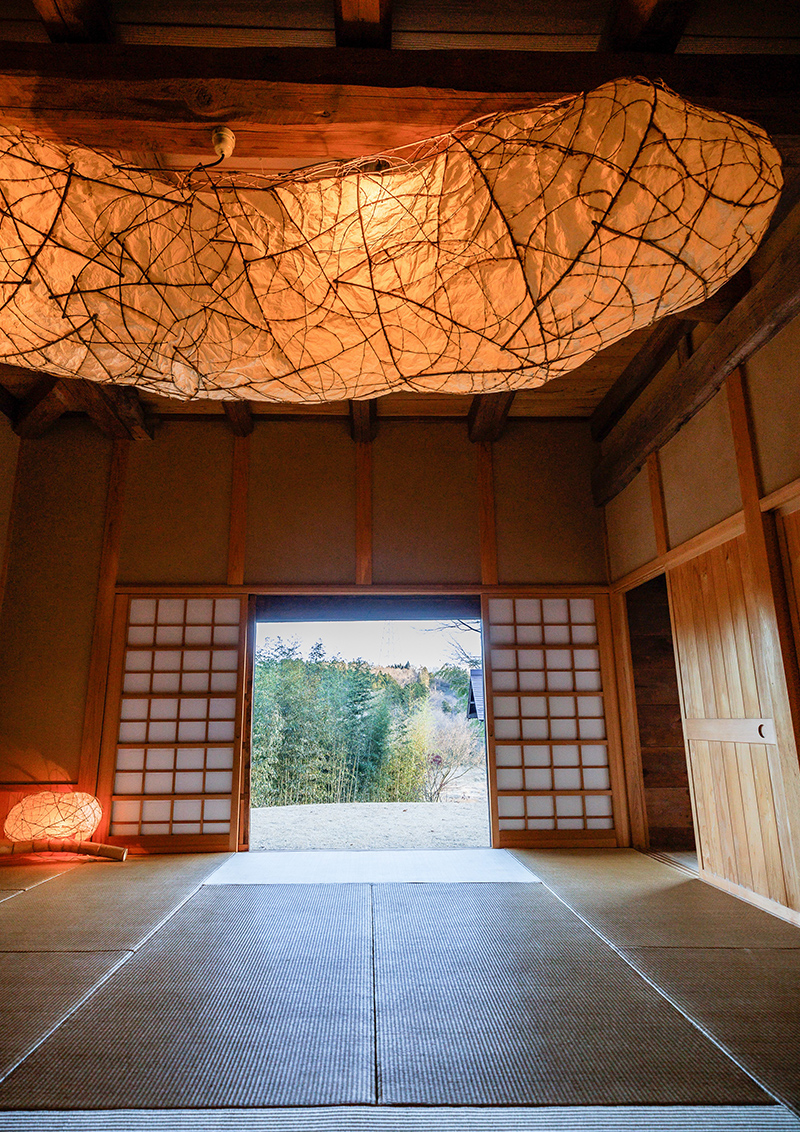
Stay in a 200-year-old Old folk House
Kaze no Sawa, deeply rooted in Kurihara, Miyagi Prefecture, is not merely a lodging facility but a living cultural asset where architecture and art intersect. Thick beams and thatched roofs, bearing the marks of past livelihoods, are reinterpreted through a contemporary lens, breathing new life into them. Through the dialogue between the architect who supported its journey to becoming a Registered Tangible Cultural Property, the artist who enriches its spaces, and the owner who resolutely safeguards and carries on its legacy, we unravel the essence of how to live history within the present moment.
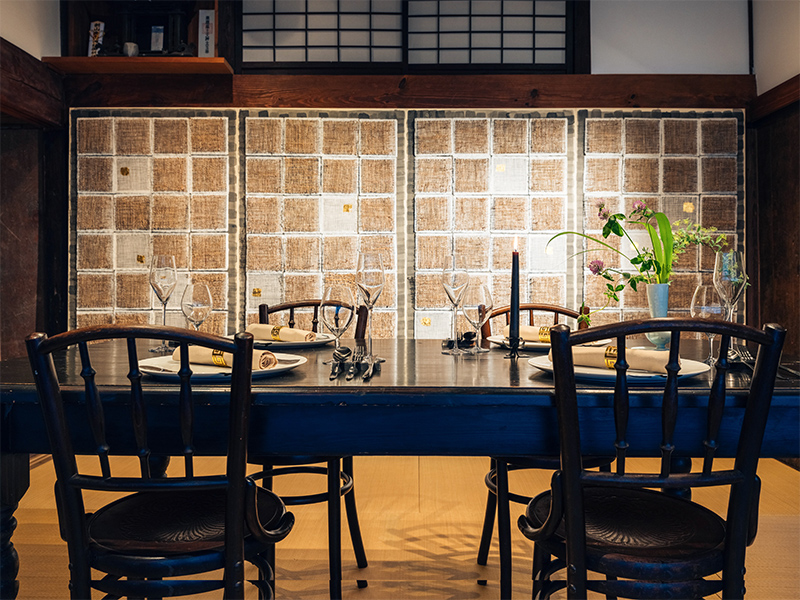
Toward a Space Where Natural Textures and Artisanal Craftsmanship Resonate:
An Interview with Ryusaku Matsuda
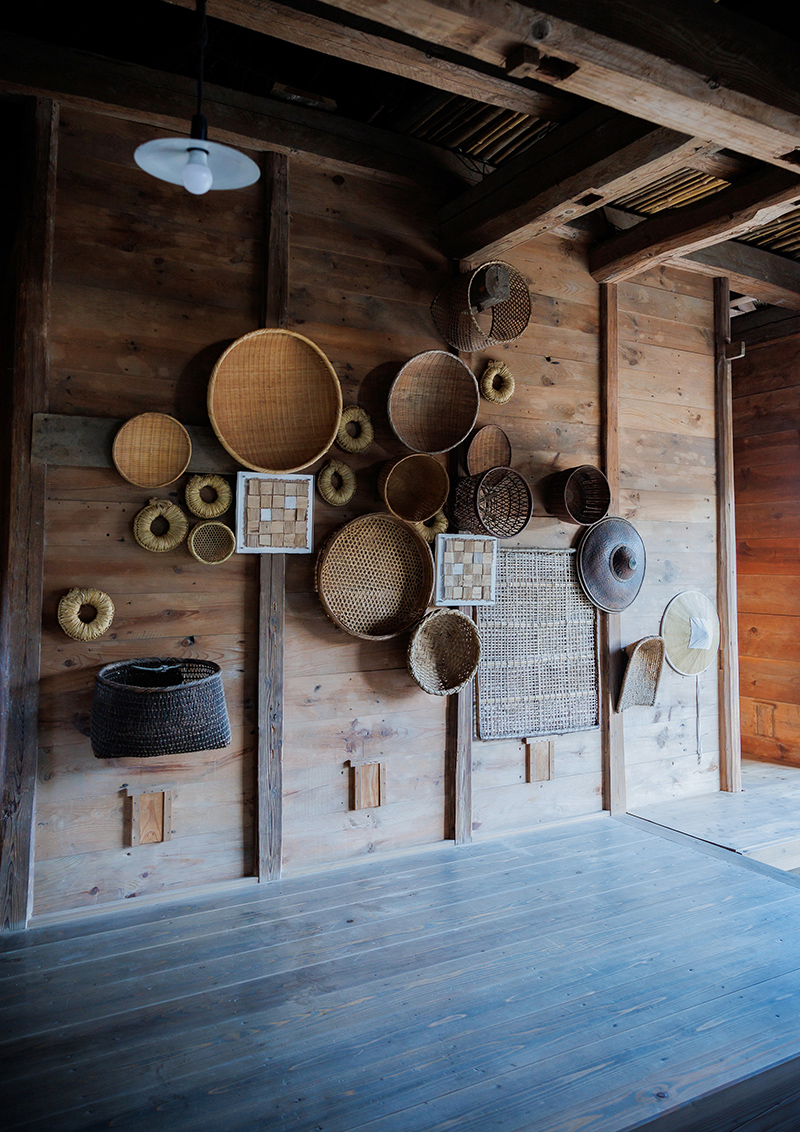
Once beloved as a museum open to the community, "Kaze no Sawa." This space, still steeped in its memories, has now transformed into an ultimate private gallery accessible only to guests. Here, you can monopolize luxurious solitude while coexisting with art.
The spirit of the facility's predecessor, the Kaze no Sawa Museum, still lives on throughout the building. The exhibition rooms once visited by audiences have become tranquil living quarters reserved solely for guests, blurring the boundaries between daily life and art. The most impressive feature is the plant installation by Ryusaku Matsuda, seamlessly integrated into the powerful framework of the old folk house. By removing the floorboards to expose the earth beneath, the artist elevates the building itself into a single expressive entity. At night, in the stillness of the great hall, facing the work one-on-one, the experience transcends mere visual perception and transforms into profound contemplation. What unfolds is a luxurious dialogue—a resonance between nature's grain and human craftsmanship—one that can never be found in a city museum.
Art that holds life in its hands
"Arranging flowers is to be entrusted with life."
Mr. Matsuda's words evoke the aesthetic sensibility toward daily life that Japanese people once naturally possessed. The beauty residing in Kazenosawa, not in the mansion of a wealthy merchant but in an anonymous "old folk house," embodies the quintessential Japanese sensibility of finding beauty within the routine of daily life. Reflecting the seasons, cherishing tools. This tradition is renewed as a "new standard" through Mr. Matsuda's contemporary approach. The perspective that plants possess a soul until they decay and return to the earth presents not a beauty to be consumed, but a beauty that circulates. It rejects excessive ornamentation, cherishing instead the essence residing in the details of daily life. Time spent in this place offers hints for restoring profound depth and rich texture to modern living, which often tends to be bleak.
Savoring the Local Flavor: The Table of Circulation Interview
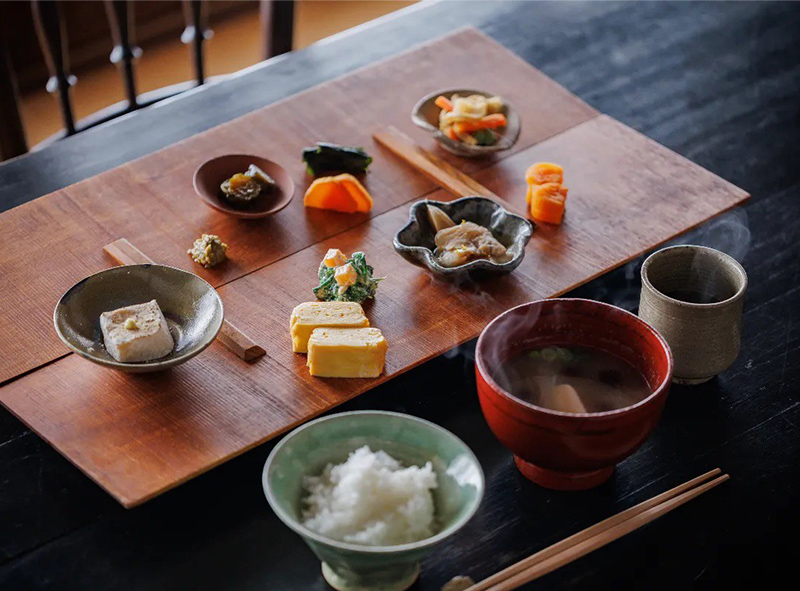
Winters in Kurihara are harsh, and the spaces within the old folk house don't warm easily. Yet the moment Chef-Owner Hitoshi Takayama's dish is placed before you, you realize even that chill was part of the tuning required to savor the "authentic." "If viewed purely as a business, utilizing old farmhouses isn't suitable," Takayama asserts. Unlike places like Kyoto or Kamakura, embedded in a tourist economy, rural areas like Kurihara suffer from a stark disconnect between capital and daily operations. Custom-made building materials, difficult-to-maintain thatched roofs, inefficient air conditioning. Yet Takayama continues to cook here because he believes the "beauty in the details" of this architecture possesses a strength capable of competing on the world stage.
Underpinning the food served here is a resonance with the philosophy of ikebana artist Ryusaku Matsuda: "We are entrusted with life." The Japanese phrase "Itadakimasu," recited before meals, expresses reverence—an acknowledgment of inheriting the souls that dwell within plants and animals until they return to the earth. A meal at Kaze no Sawa is not merely about nourishment. It is a ritual of incorporating a part of the vast life cycle of the satoyama landscape into oneself, mediated through the vessel of this old farmhouse. "Modern products have become sterile, pursuing convenience alone," Mr. Takayama observes. In contrast, this 200-year-old former farmhouse embodied a deep intertwining of daily life and aesthetic sensibility. To preserve this depth, he deliberately insists on "naturalness." He refuses to sell the soul of the space to modern comfort through excessive renovation for commercial gain. The winter chill, the scent of burning firewood, the quiet emanating from the plaster walls—all are essential elements forming the backdrop for the food. Mr. Takayama's cuisine overflows with a vitality that matches the architectural strength of the space. He reconstructs ingredients imbued with the land's memory through the cold analysis of an accountant and the aesthetic eye of an artist. It is also an attempt to transform previously undiscovered primordial Japanese landscapes into value that holds its own in the global market. Managing ten thousand tsubo of land, he shoulders the responsibility for the region's enduring beauty. The culinary experience born of this resolve awakens a forgotten sense of living connected to the earth. Beneath heavy beams, one faces a plate brimming with the essence of life. Here lies an overwhelming "standard of richness" that cannot be measured by efficiency or convenience.
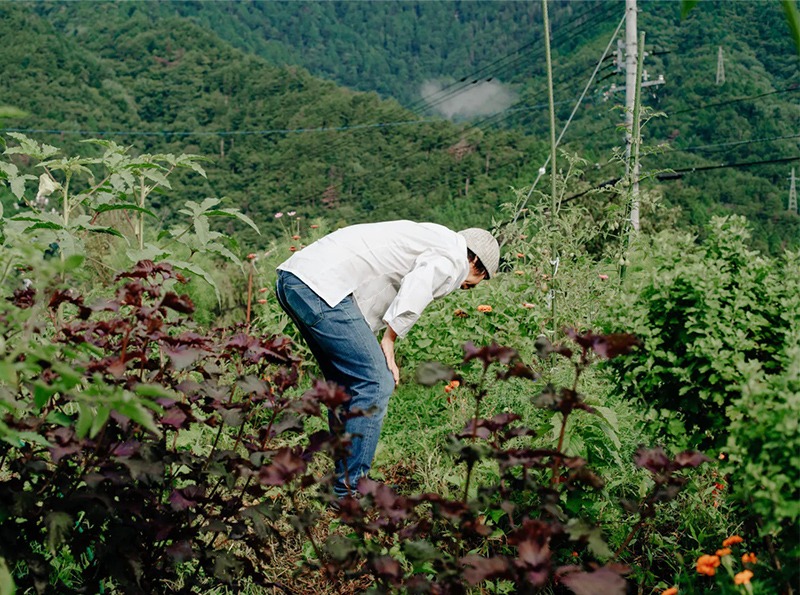
What Kaze no Sawa, having marked two centuries, asks of us is not mere nostalgia. It is a declaration of will: what we choose as our "standard" alongside an ever-accelerating consumer society. Architecture, art, food. These three perspectives intersecting here teach us how to replant the seeds inherited from the past into the soil of the future.
"When built, old houses were the latest. Therefore, what we build now should become the old houses of the future." Architect Kinya Hayakawa's words strike at the heart of inheritance. The value that endures through time's trials is the very history of someone continuing to cherish it, tending to it, and using it. Now, Kaze no Sawa is moving toward its next phase: "sustaining the area" with a vision for the next 100 years. Takayama's vision—to integrate the entire region into a cycle of capital and economy—is a vital strategy to prevent cultural assets from becoming isolated. Matsuda's philosophy of cyclicality, that "a soul resides in plants until they return to the earth," applies equally to buildings and our lifestyles. We seem to be losing our "time for exploration" and our "leisure" in a world that prioritizes efficiency. That is precisely why we invite you to escape the clamor and experience the dull glow emitted by a 200-year-old pillar encountered in Kurihara, the fleeting forms drawn by plants returning to the earth, and a single dish distilling the land's memories. Each of these confronts you with an overwhelming resolution utterly unattainable beyond a screen. Rather than following someone else's curation, trial and error should become the yardstick defining your unique value.