
Hunting Art in Tohoku.
The Tohoku region is where hunting and art intersect.
We followed the work of notable artists who hunt themselves, and those who are passing on hunting as a culture.
PHOTO/TEXT/DIRECTION : Rin Kurosawa
If I'm going to paint pictures of wild animals, I want to get to know them properly before I do so. With this in mind, I was invited by a senior at university to get my hunting license in November 2025. My family live near the mountains, so bears and other animals were a familiar sight, and more than anything, I love being involved with nature, so I decided to enter the field of hunting.
In doing so, I learned about artists who create art while hunting, and also met people who are trying to preserve hunting as a culture.
These activities can be collectively called "hunting art." This is a report on current hunting art in Tohoku.
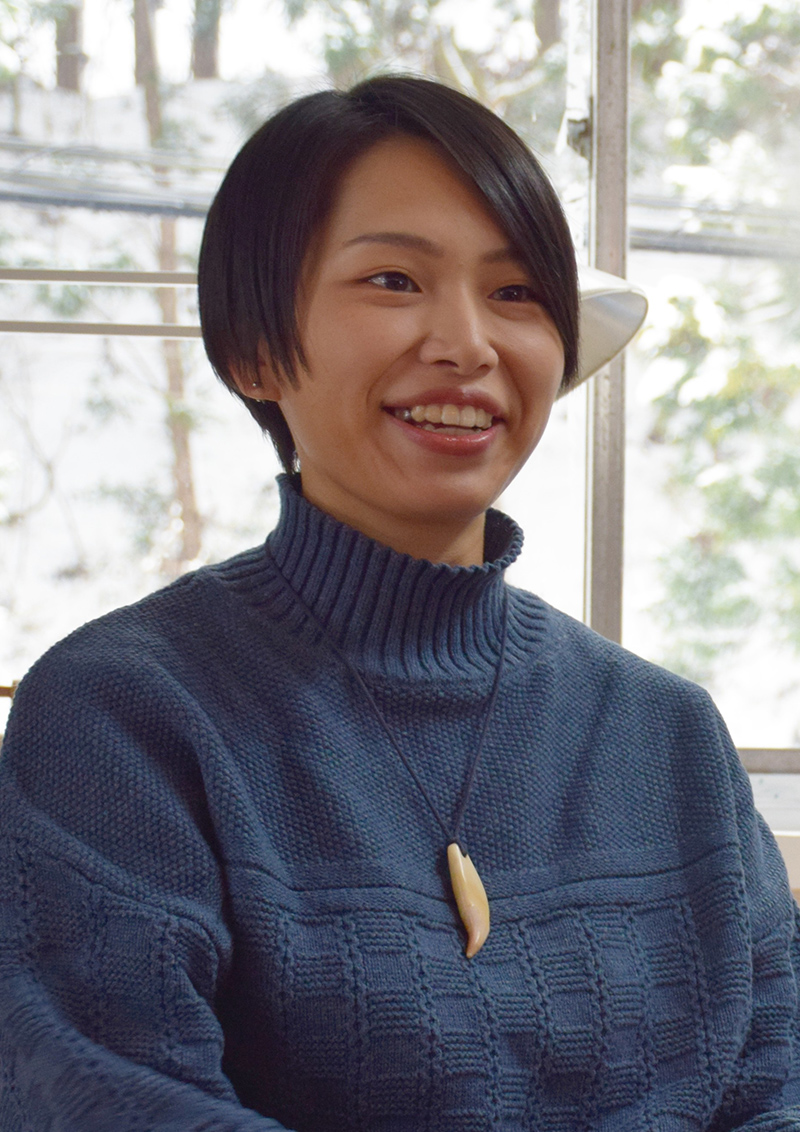
Artist
Aoi Nagasawa
AWARDS
Akita Prefectural Art Exhibition, Design Division, Grand Prize(2012)
2nd Art Imagine Small Works Exhibition, Selected and Prize Winners Exhibition(2014)
21st Art Move Competition, Selected, Irodori Award(2016)
Akita Prefectural University of Art Graduation Exhibition, Chairman's Award(2018)
VOCA Exhibition 2023, Perspectives on Contemporary Art -New Artists of the Plane- VOCA Award(2023)
9th Higashiyama Kaii Memorial Kei Nihonga Grand Prize, Selected(2024)
Akita Prefecture Art Encouragement Prize, Art Division Award
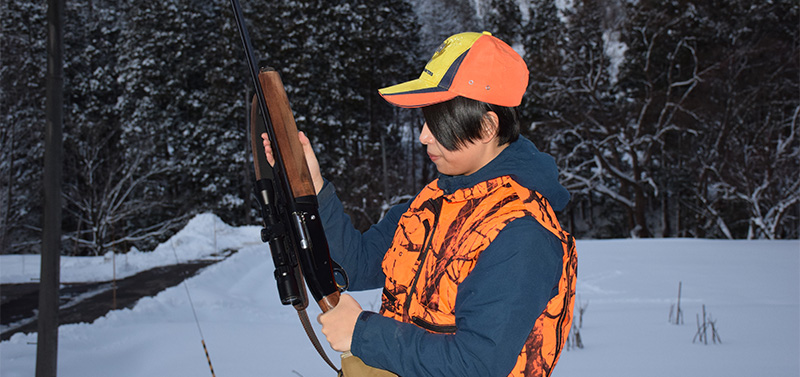
Giving back to nature at the intersection of hunting and creativity
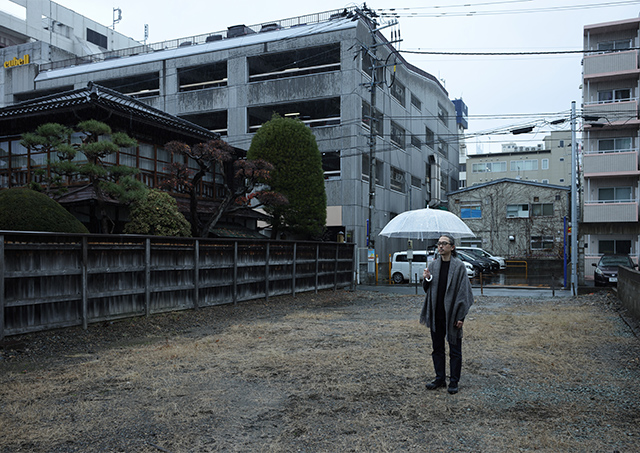
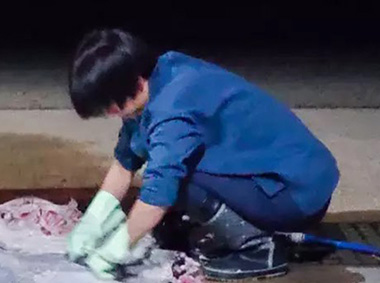
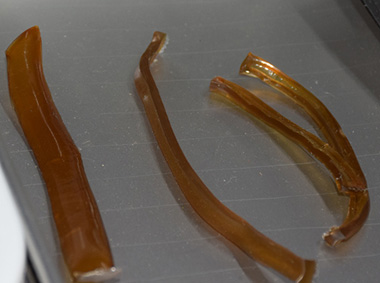
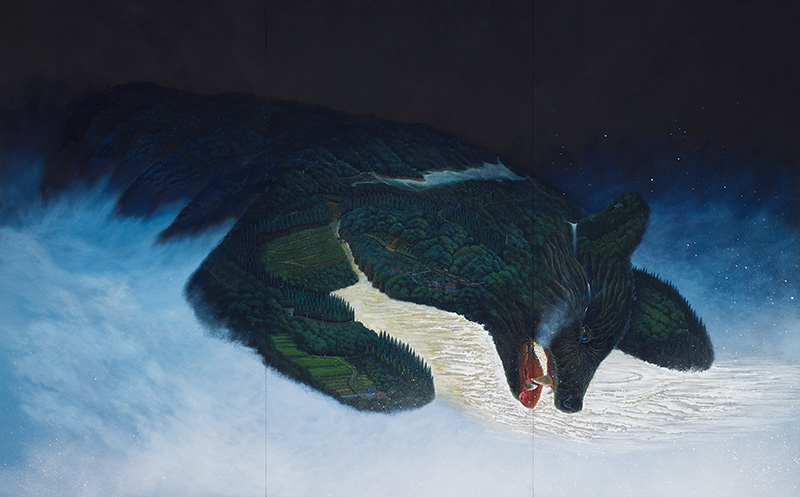
There is an artist who creates art while facing the mountains, such as by hunting and pest control business and extracting glue from butchered bears, deer, and wild boars and other animals. This artist is painter Aoi Nagasawa. Born in Yokote City, Akita Prefecture in 1994, Nagasawa grew up in a natural mountain environment, and while studying at Akita Prefectural University of Art, she conducted fieldwork in the great outdoors. Through this fieldwork, she learned from others and made new acquaintances.
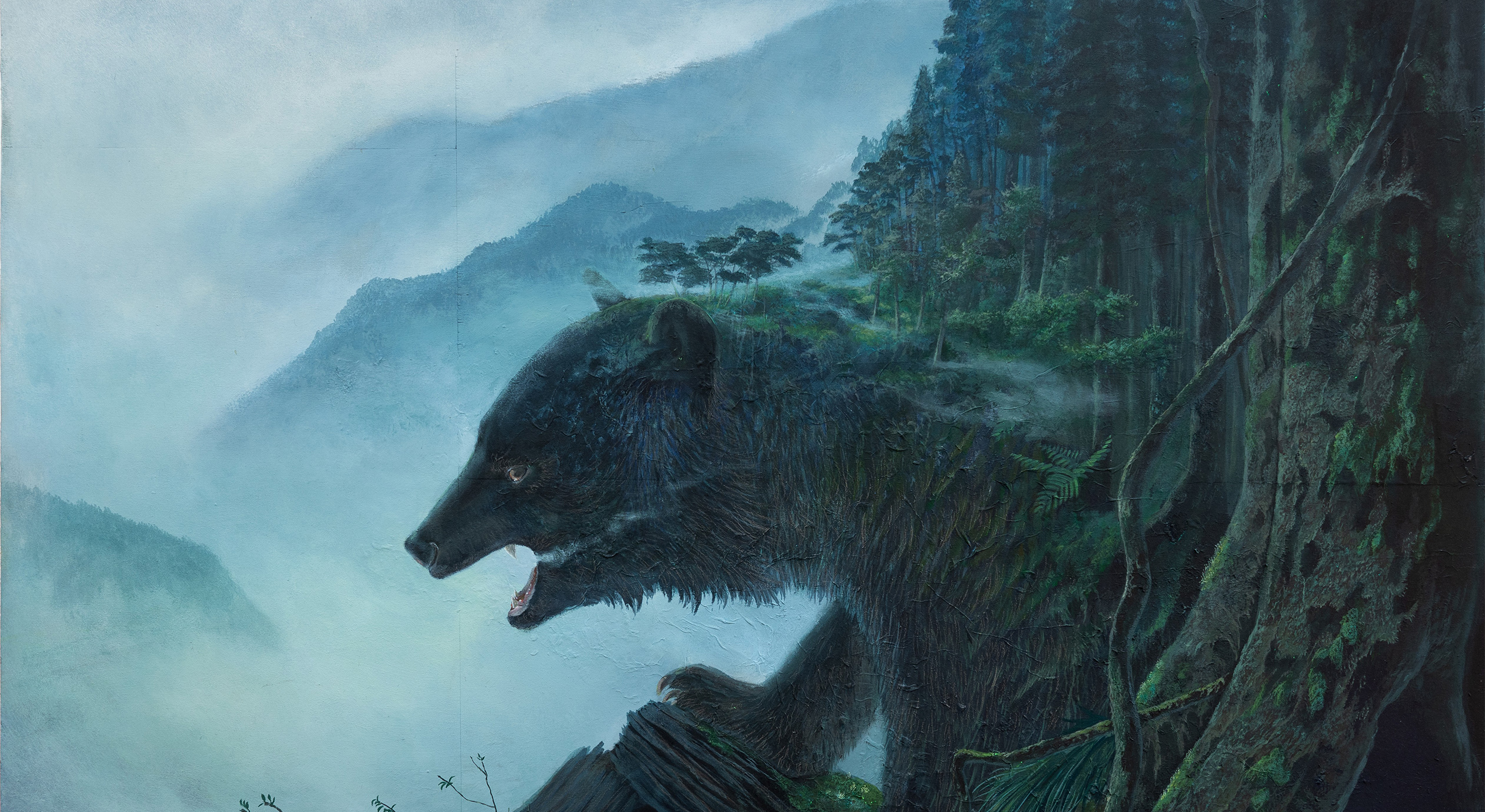
Nagasawa is involved in the hunting culture of Tohoku and even obtained a hunting license herself. As she gained more experience as a hunter, she began to create paintings that record and express her relationships with the various things she encountered.
She continues his fieldwork, facing the mountains every day, as she journeys to trace the origins and cycles of life and traces of memory.
All the meat and wild vegetables that are caught are distributed equally among the group, even to those who did not go hunting at that time. Furthermore, there is also the idea that those who received some when they did not go hunting will feel a sense of repayment and will pass it on to others the next time they go hunting.
When Nagasawa thought about what she could give back to nature, she decided that she could express this through painting.
Through hunting, Nagasawa has come to understand its profound depth by reflecting on her experiences alongside her fellow hunters. She finds it fascinating to feel herself drawing closer to the true essence of nature. For her, the real allure lies in the constant freshness of each new discovery, where the act of hunting and the process of creation intersect.
--What made you decide to pursue hunting?
"I was doing research focusing mainly on fish migrating back upriver from the sea to mountain rivers, and I had the opportunity to visit the northern part of Akita Prefecture. There, by chance, I stopped at an inn run by a Matagi hunter called Matsubashi Ryokan, which I was visiting to interview a fisherman. While I was staying there, I was introduced to the Matagi hunter, and that's how I ended up going into the mountains. I'd fished before, but it was my first time going into the mountains during hunting season, and that's what got me started."
--Nagasawa-san, you incorporate animal themes into your work. What is your mindset during the creative process?
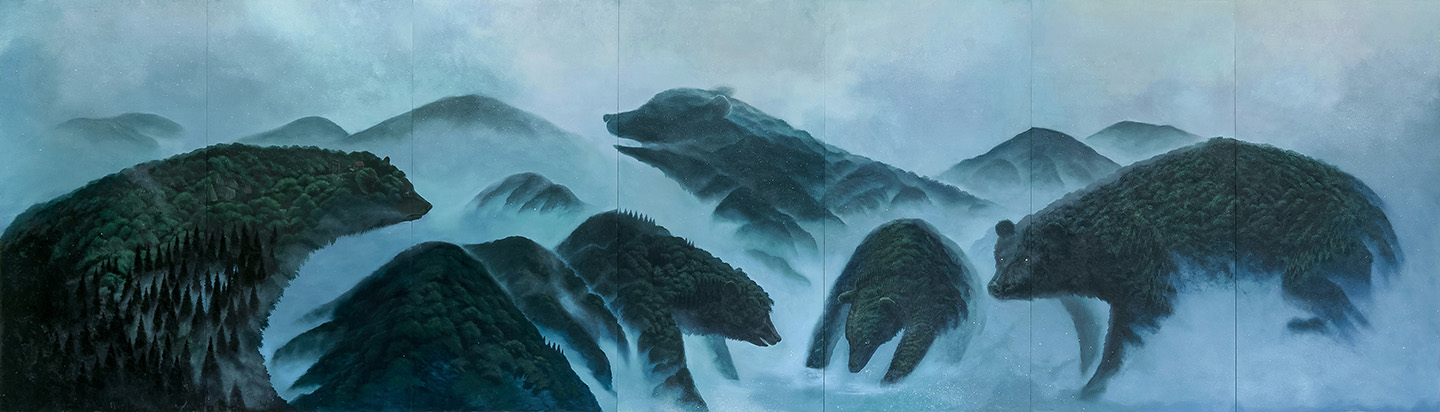
For the animals I paint, there is almost always a specific model—creatures I have actually encountered, such as bears, fish, deer, or wild boars. Furthermore, because I process the bodies of these animals to create my own art supplies, I have learned not to depict the same model repeatedly. Rather than viewing them merely as motifs or materials, I see them as unique individuals. Consequently, I feel no need to embellish or replicate them unnecessarily. My goal is to complete each painting as a singular entity; it is almost as if I am performing a "soul transplant" onto the canvas.
--Does this perspective stem from a combination of your hunting experiences and the traditions of the Matagi?
To begin with, the Matagi believe in mountain deities, viewing animals and wild plants as sacred gifts from the gods and nature itself. They also share a history of economic development intertwined with bears. Culturally, the term "Matagi" historically referred to hunters who received special government permission to practice traditional group hunting. This tradition originated in the Ani region of Akita Prefecture.
In the relationship between humans and nature, the Matagi believe that what the mountain bestows is earned through a one-on-one "competition" or encounter, rather than simply "taken." One practice that embodies this faith is called Matagi Kanjo (Matagi accounting). This involves sharing the hunt equally with the entire community, utilizing every part of the mountain's bounty, and fostering a cycle where even those who couldn't join the hunt repay the blessings later. It is, so to speak, a philosophy of sharing.
This unique Matagi sensibility evokes a form of ultimate "sharing-ism" or communal values. In my case, expressing these blessings through painting is a way of giving back. While I do consume what I receive, I believe it is vital to express myself as a human being and leave behind a record of this gratitude through my art.
I don't believe this is limited to painting; any medium will do. At the root of everything I do is "expression." Creating a work is not the end goal; what matters is giving form to my experiences and connecting them to what comes next.
Problems and possibilities facing hunters today
This time, I interviewed a hunter I'm on friendly terms with (hereafter referred to as Mr. A), who requested anonymity for certain reasons.
According to Mr. A, there are a variety of reasons why people join the hunting association.
Many join to protect a friend's field from pest damage, to connect with the mountains and nature, to eat meat, or as an extension of a hobby,
or to obtain a collective qualification at work.
First, I asked Mr. A what inspired him to start hunting.
He said that his family had been hunting since he was a child, and back then, meat was scarce and expensive, so he became a hunter partly because of the relationship he had with his friends.
Some people take up hunting because they love the mountains and food, and want to make it a hobby. "Everyone has different motivations, but we all do it because we love it, and at the same time, we try not to waste the lives of living creatures."
However, through our conversation, I got the sense that each person's method of doing so varies.
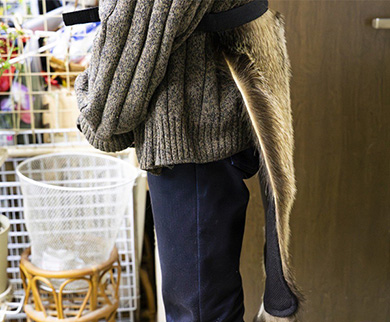
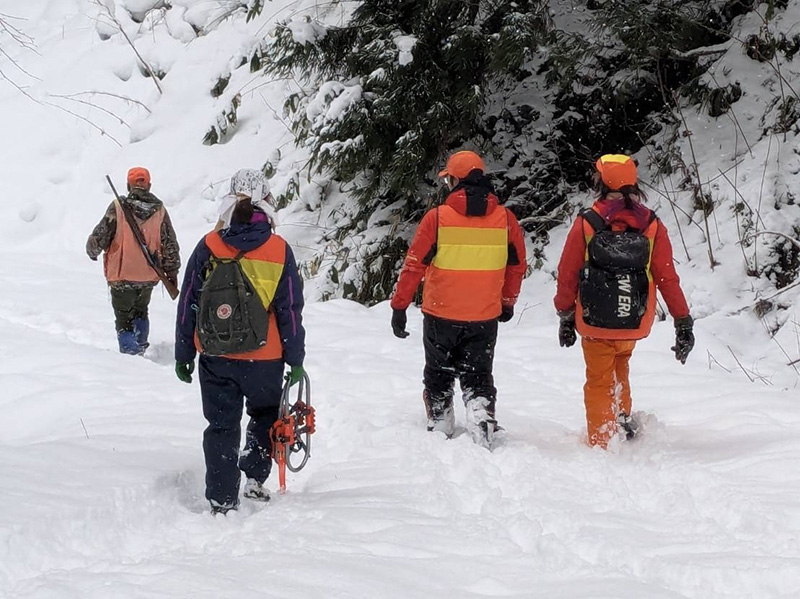
Mr. A described himself as a "Sunday hunter." "I have another job and I don't live in the mountains." But he still enjoys being involved with the mountains and making a living as a hobby, and he said hunting is a wonderful thing. He goes into the mountains, enjoys the changing scenery and nature, and gets excited with his friends when he finds animal tracks.
I also think there's nothing wrong with starting to hunt in order to have this kind of interaction.
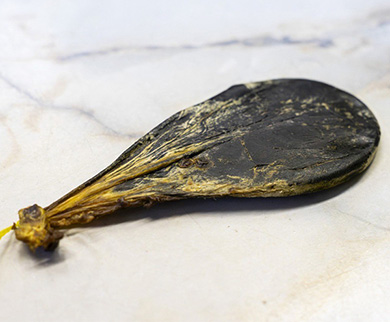
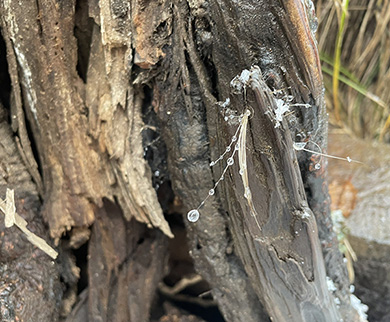
There is some body hair attached.
I think the current environment, where hobby hunting is becoming more common, is a great thing. If we view it too seriously because it involves talking a life, it will only make this ancient activity more difficult to participate in.
Hunting can be fun, but it's also important to consider how you take responsibility for your actions.
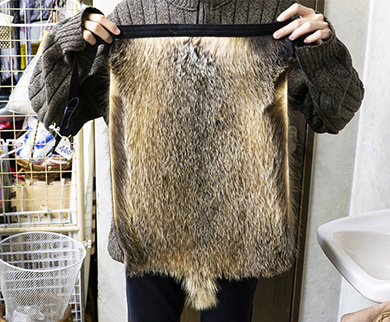
Mr. A says that even if he eats the meat of the animals he captures, he buries or burns the bones and skin. "When we catch a lot of bears, we don't have time to process them all, so unfortunately, we have no choice but to discard them."In addition to hunting, he also skims the fur and makes a traditional Chinese medicine called "bear stomach."
It seems that if he salts and transports the skins he removes to a company in Niigata, they can be processed as shown in the photo on the left.However, this process is extremely expensive, so the skins end up being discarded.
He says he is constantly exploring ways to utilize the fruits of his hunting experience for society.
Nowadays, there are few places that handle hunting crafts. Even if people catch wild animals, many people lack the skills to process them themselves. Even if they turn them into crafts, they won't be able to store them if they're all made into specimens or carpets. Some people don't feel comfortable giving them away or selling them within the rules, so it's painful to throw them away."
Perhaps because of this background, when we, two students from the University of Art and Design, offered to create works using hides and bones that would otherwise be discarded after hunting, he readily agreed to give them to us.
Listening to his story, I realized that hunters also want to find effective uses for the fruits of their hunting. Meanwhile, I realized that we, art students, have the skills to turn them into art. Furthermore, I felt that my creative approach of "finding value in discarded materials" meshed well with the hunters' ethical values of "responsibility for the lives we've been given." I often hear voices of interest in hunting within the university, so I'd like to combine our two approaches to solving problems and raising awareness of hunting.
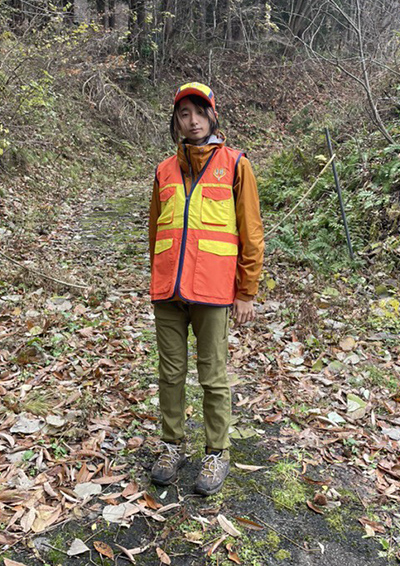
Tohoku University of Art and Design, Department of Fine Arts, General Art Course