
Tohokuʼs Freest Bibliobattle
Distinctive shops are a townʼs treasure.
PHOTO: Keitarou Komai / TEXT: Touya Sasaki
Have you heard of "Bibliobattle"? It's an intellectual game that originated at Kyoto University in 2007. Participants have five minutes to introduce their favorite book, and compete to see
whose book makes others want to read it the most. The theme of the game is "getting to know people through books," and activities are being carried out nationwide.
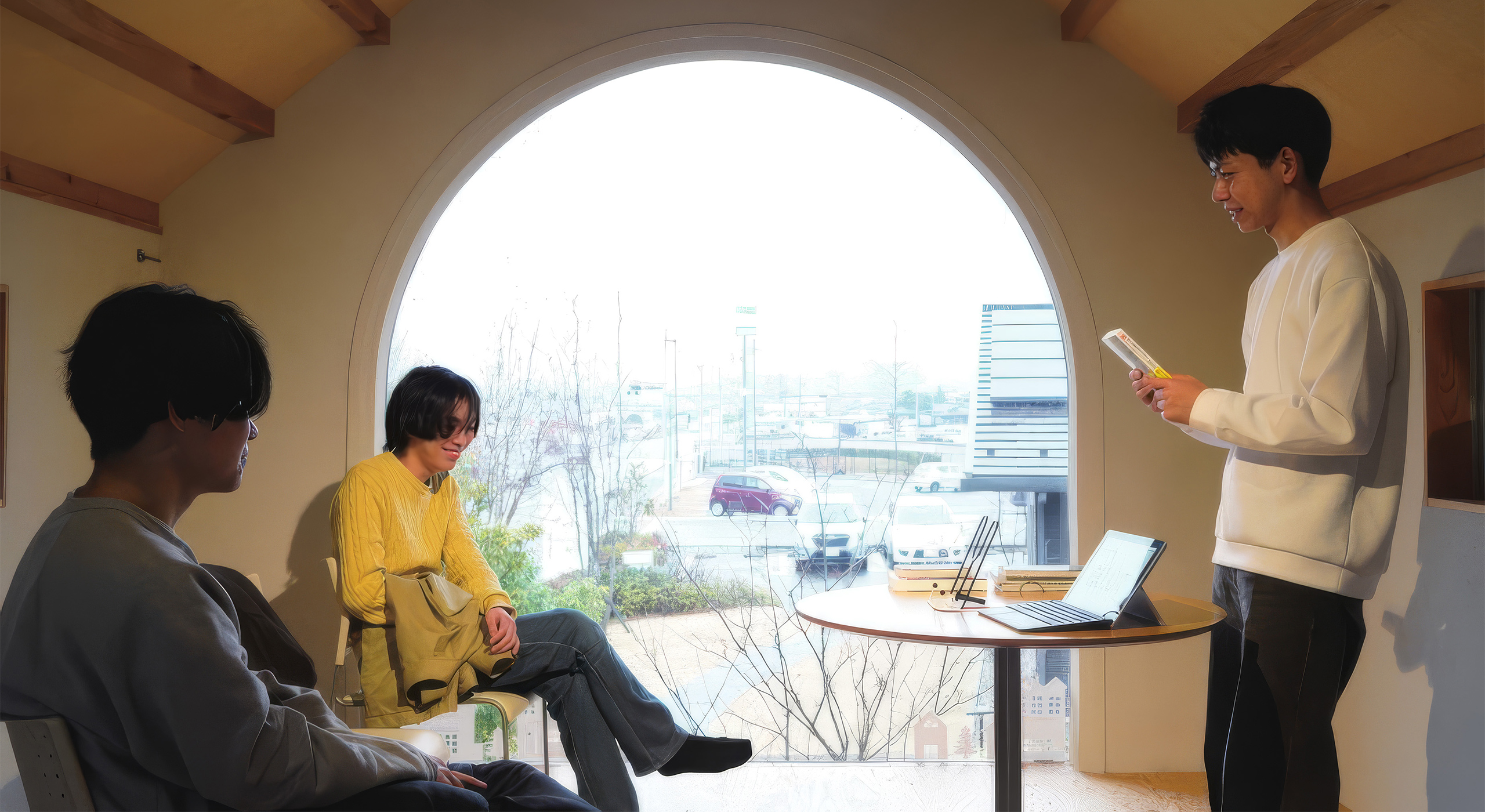
Nokishita Biblio is a prominent bibliobattle circle in Tohoku. Based in Open Village Nokishita, the circle has been praised for its improved game rules and open-minded approach to activities that welcomes a wide range of players, and in 2023 will receive the Bibliobattle of the Year Universal Award. This bibliobattle circle is particularly notable in Tohoku.
Why is Open Village Nokishita, the setting of the game, so popular with players? Why is Nokishita Biblio attracting attention? We explore this from the perspective of a Bibliobattle participant.
Reading is not a lonely thing.
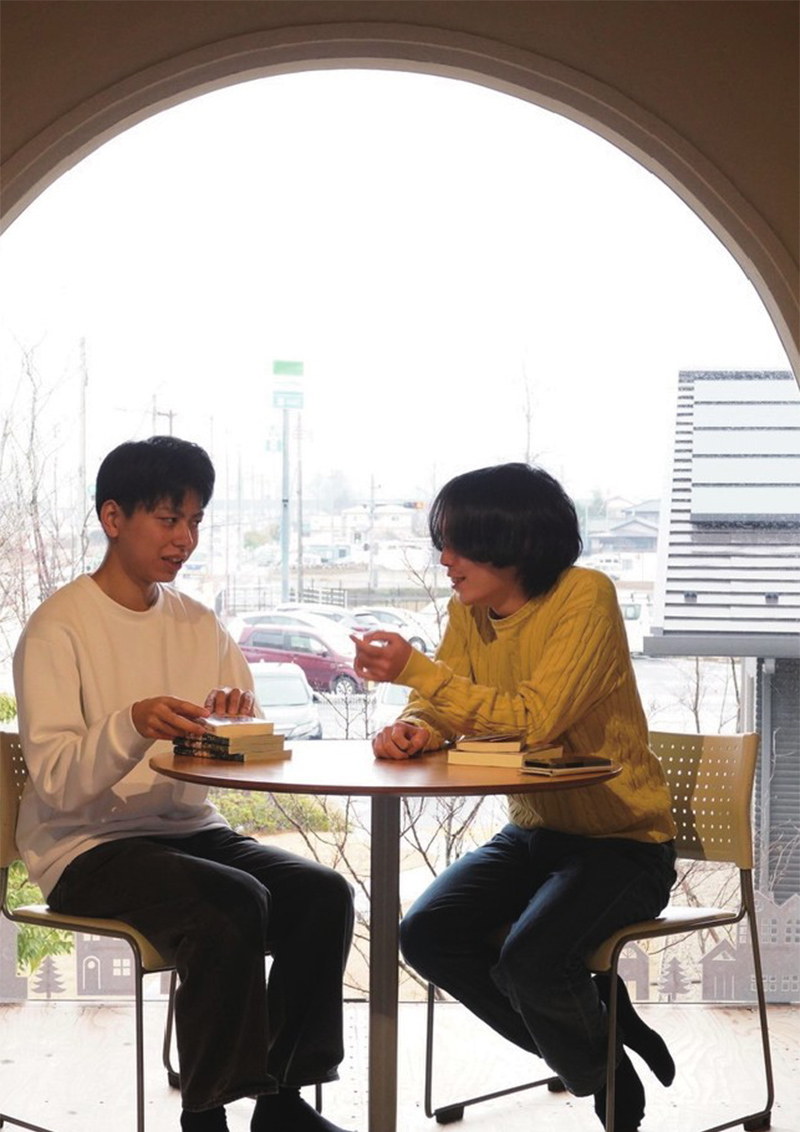
Nokishitabiblio is a place where people meet.

Founder of Nokishita bibrio,
Keita Kato
Founder of Nokishita Bibrio. Winner of the 2020 Biblio Battle of the Year Newcomer Award. In addition to Nokishita Bibrio, he contributes to the spread of Bibliobattle through his work as a lecturer and the organization of official tournaments.
We spoke to him about his many years in the industry.
A place that connects people through books
──What does bibliobattle mean to you, Kato?
"I guess it's entertainment. It's included in university entrance exams and is said to be something that requires a lot of intelligence, but it's not that difficult. I think of it as entertainment, just like games or exercise."
──It's not something you have to be too tense about, is it? The scripted presentations you often see at venues in Tokyo and elsewhere seem like a waste.
"That's right. The interesting thing about bibliobattle is that you talk about something that's unique to that moment, using your own words and atmosphere. It's completely different from a speech. I once attended a meeting that an old man attended, and he spoke for five minutes about half his life. He ended by saying, 'From experience, I can't introduce this book in five minutes, so I'll wrap it up here.' It was blunt, but strangely persuasive, and an old man became the champion of the event. That's what bibliobattle is all about. Even if you're talking not just about the book but also about the speaker's personality, as long as you make people want to read it, you've won."
──What's Kato's style as a speaker?
"I don't really think about a script. If it's a big national competition, I might prepare a schedule memo, but basically I just speak what Iʼm thinking, whatever comes to mind"
──I'm the same way. I don't know if it's a winning strategy, but it's more fun.
"It's difficult. A winning bibliobattle is different from enjoying it. When I try to win, I consciously lower the tone of my voice and change the intonation. But that's tiring. If I speak naturally, that's enjoyable bibliobattle."
──There are people who can win being themselves, aren't there?
"I can think of a few. One particularly memorable person is someone who has been in the same club for a long time, and who hides his personality beyond his love of books and creates a mysterious image. It's a friend of mine whose identity is unknown.
He has such an attractive weapon, but he speaks naturally and with a strong voice. That's unfair."
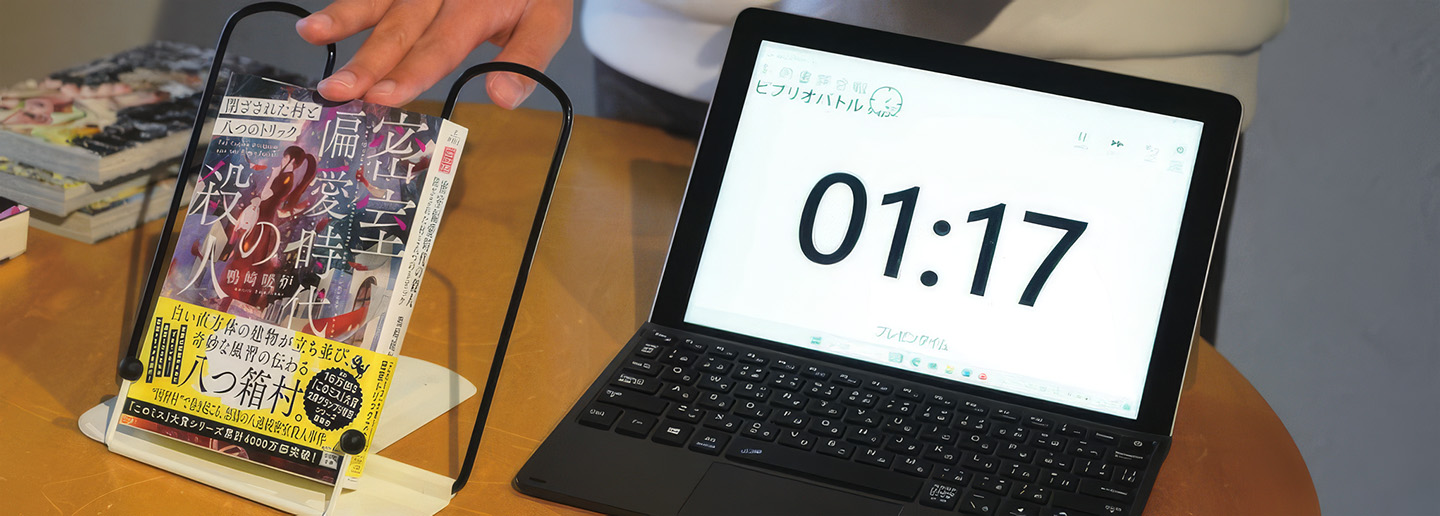
──I have yet to beat him even once.
"That's what's interesting about bibliobattle.
bibliobattle depends on the speaker. It's like getting to know people through books, but it's different from a speech. Depending on the combination of the speaker's personality and the book, you can win just by selecting the book. Because in bibliobattle, you win if you make people want to read it. It's not enough to just give a good presentation. If you lose, it's frustrating, but you end up liking the player and the book. That's what makes it interesting."
──What is the difference between Nokishita Bibliobattle and other venues?
"It has a special feeling. A beautiful venue, and people you'll only meet here. You battle there and get to know them. I think it feels more otherworldly than other venues."
──It's different from wherever you play.
"But I don't feel like I'm playing away from home. I get fired up in a way that I don't get at big official tournaments. It's probably similar to the feeling of being a theater performer. I think Bibliobattle is somehow similar to theater. I guess you could say it's different from a presentation. Rather than reading and talking about the interesting parts, I'd say it's closer to my style to say I'm 'recreating the feeling of being moved after finishing a book.' In that sense, this stage-like venue allows me to do what I want."
──I have a similar style, so I can relate.
"In a way, it's a stage that brings out the best in you. Rather than wanting to talk about my favorite books with someone at Bibliobattle, I want to re-experience the feeling of being overwhelmed by reading my favorite books.
Here, I can do that with all my might. That's something that's hard to achieve at other venues. I think it's probably possible because this is a place with children and elderly people. Things that would be a little embarrassing anywhere else are possible here, but I can give it my all without any stress. It's strange, considering that this is a venue where many players are meeting for the first time."
──That sense of trust may be the secret to the freedom of the event.
"That's right. As a player, the organizer Kato-san doesn't adopt an outlandish style.
In fact, he tends to play a more casual style. I don't know if it's intentional, but he sets a baseline for how much you can reveal.
Through the organizers' presentations, they implicitly indicate to the venue how much they're willing to accept, so anything is possible within that realm. Perhaps that solid foundation contributes to the freedom.
New rules are also possible."
──Unconventional rule modifications are also part of Nokishita's appeal.
"I'm really looking forward to that. There's the 'Yume Biblio', where we come up with fictional books on the spot and introduce them. It's interesting because if you're familiar with the literary world, you can catch the parodies. I'd like to do it again. In terms of a strong foundation, I think Nokishita Biblio is a stage where you can play with with special rules and tactics, and that doesn't fall apart even if you get a little naughty."
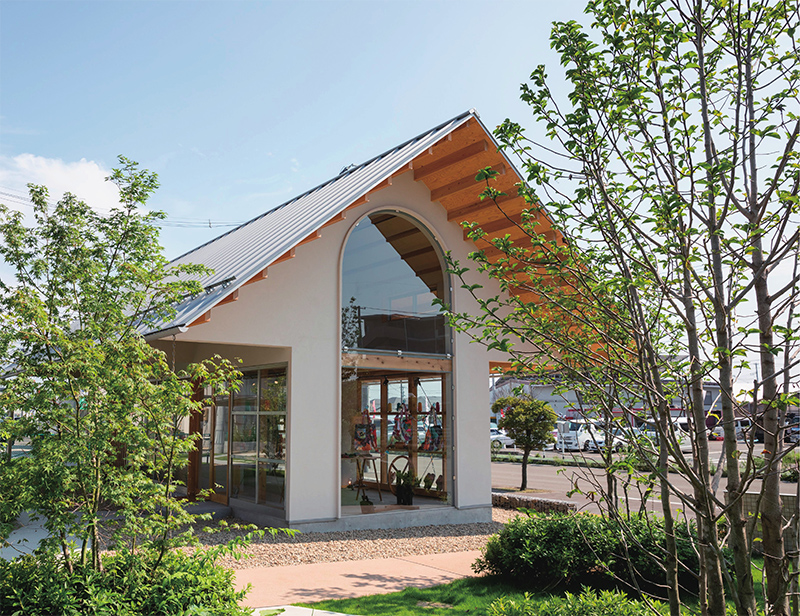
Nokishita, a place that supports
freedom and challenge
OpenVillage Nokishita serves as the setting for "Nokishita Biblio." Seiya Kato, the representative of this establishment, holds the title of "Village Mayor." Having been deeply involved in the Tagonishi district of Sendai as a construction consultant, he opened OpenVillage Nokishita based on the innovative concept of "pairing the elderly with people with disabilities." We spoke with the "Mayor" of Nokishita, the man supporting these numerous challenges.
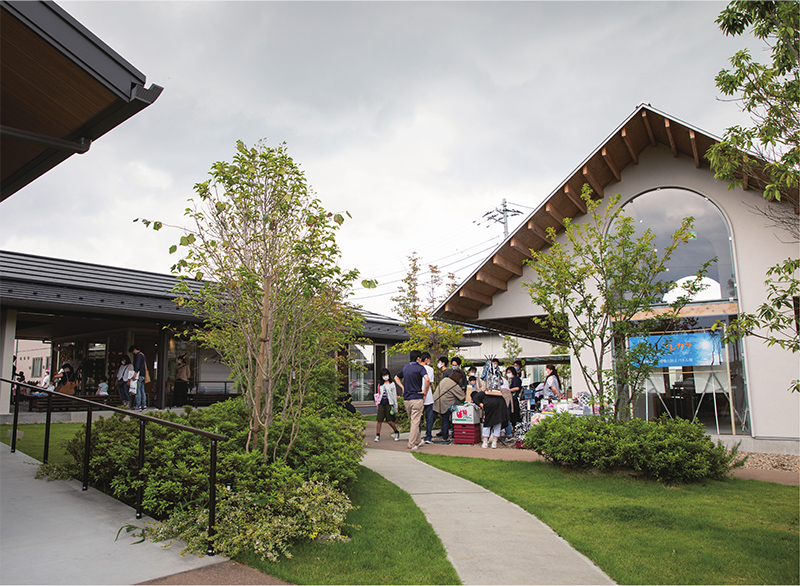
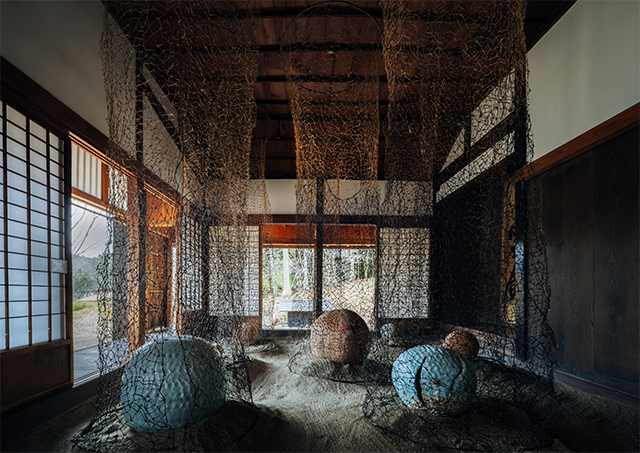
── Upon entering the building, the display of Saori-ori (Saori weaving) is very striking.
Was there a specific catalyst for starting this?
"Traditionally, weaving is a craft governed by strict rules. Any piece with loose threads or irregular patterns, like the ones you see here, would normally be treated as defective.
Saori-ori, which originated in Osaka, emerged as a way to increase creative freedom by challenging those norms.
When people gather, they need a motivation̶a reason to be there. Nothing is more difficult for a person than being told, 'Please feel free to come,' and then being left to their own devices. The scope of 'freedom' is so vast that people often worry about exactly how much freedom is permitted.
Furthermore, when visiting a new place, people want a 'justification' or an official reason for their visit. Even after they arrive, without a continuous point of focus, they might struggle to find things to talk about.
That is why we started Saori-ori; itʼs something anyone can try, and it serves as both a reason to visit and a catalyst for interaction."
── Were the art workshops held here started in a similar way?
"Actually, those weren't something we initiated. In fact, there are very few things here that we started by saying, 'Letʼs do this.' Initially, I intended to do nothing of the sort.
For instance, if I were to manage the place by thinking, 'Maybe people will come if I do this,' then only people who align with my personal values would visit. Most places in the world operate that way̶the organizer plans something and gathers people who fit into that specific category."

── That is the nature of business, isn't it?
"Exactly, thatʼs business. But I personally want to hear the raw, authentic voices of people who exist far outside my own categories. Thatʼs why I decided not to plan things myself. However, visitors told me that 'complete freedom is too difficult,' so now we focus on creating 'hooks'̶suggestions like, 'You are welcome to use the space in this way.'"
── Next, regarding the nursery school: I get the impression that the children here are very articulate. Could you share your thoughts on the nursery?
"Iʼm not sure if they are particularly articulate, but I do think they have very low barriers toward other people. Usually, a nursery school is surrounded by fences, and the only adults children interact with are their teachers and parents. But here, all kinds of people come and go. They see young people like yourselves, the elderly, and people with disabilities as a part of their daily lives. I don't know if it's inherently 'good' or 'bad,' but itʼs why the children here are so open toward strangers."
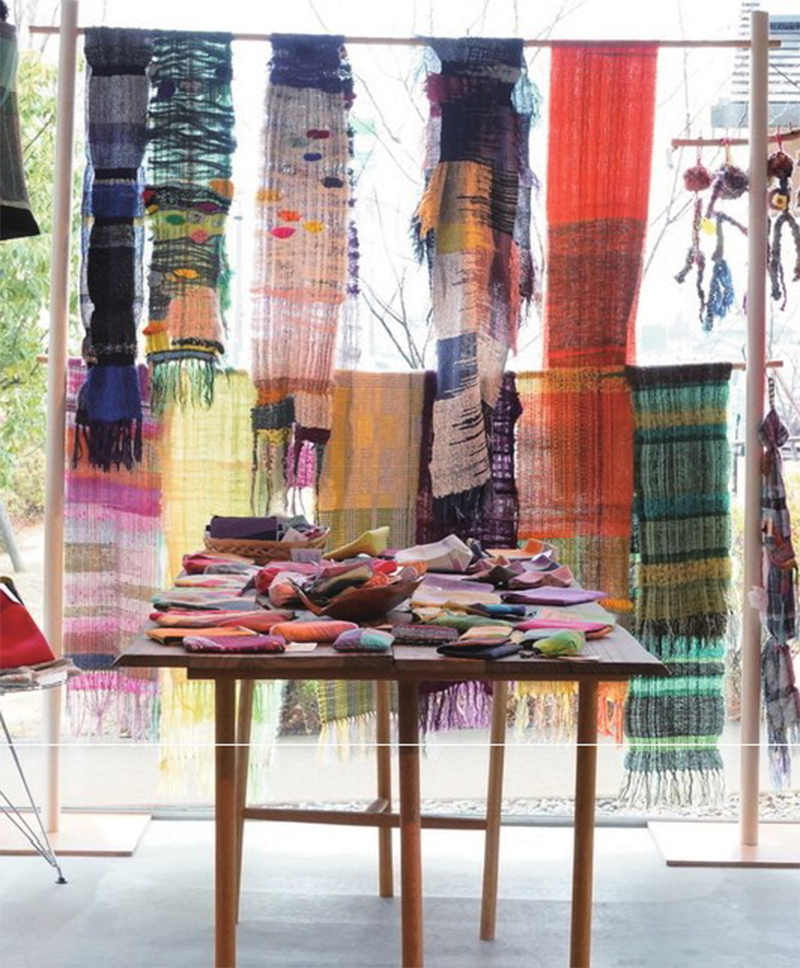
This complex includes a collective space, cafe, nursery, and disability support center. The center displays works by visitors, including "Saori" weaving. It's a unique place where people of all ages, from infants to seniors, can gather together.
Address: 1-12-4 Tagonishi, Miyagino-ku, Sendai, Miyagi Prefecture
Phone: 022-352-3022
Hours: Tuesday-Saturday, 9:30 AM - 4:30 PM
Closed: Sundays and Mondays